Sunday, November 1, 2015

A Way to Unity

I step onto the edge of the blue mat. With a quick, measured breath, I shout "taekwon!" and stride up to the wooden board holder. The referees, bearing staffs adorned with red and blue flags, stand at the center of the mat, staring stiffly ahead. From above, I can feel a hundred pairs of eyes observing my approach. Watching but not seeing, they chatter with members of their own country, each group speaking in its own tongue.  Hola's and duibuqi's, "Quoi de neuf?" and “Go USA!” ring out over the din, but few people are willing to interact with those of a different nation. People from all over the world pack the stands, but as if to assert and stand by their distinct identities, each group takes care to differentiate their portion of the stadium with national flags, banners, and brightly-colored jerseys from their country.
For a moment, I allow the noise of the crowd to fade into a subdued buzzing in the back of my mind. My breathing slows as I focus on the wooden board in front of me. Every muscle in my body is tense with anticipation as slowly, deliberately, I take a step backwards. For a lightning instant, the pressure of a thousand chanting voices and wailing air horns in the audience pushes against me, and I freeze. But with a sudden burst of adrenaline, I explode toward the target.  “Snap!” the sharp splintering of the board pierces the air, followed by a dizzying roar as onlookers rise, cheering in appreciation. In that instant, I see and hear not individual countries in the crowd, but a single community, standing and clapping together, united in the exhilaration of the moment. The discordant clashes of conversations in various foreign languages melt away, replaced by the unanimous tongue of the world community. As I gaze over the crowd, for a second, I am a part of this united nations, in which no language or cultural barriers can dent our shared heritage.
By the time I return dazedly to my coaches, individual conversations have re-started, and the arena is again filled with the noise of hundreds of clashing languages, as each person cheers for athletes from his own country. Yet small signs of our moment of unity remain. As I pass through the crowd, one or two of the waiting groups of athletes meet my gaze, and they smile and nod encouragingly. When I look up at the spectator bleachers, a young boy from New Zealand cheerily waves his flag at me. Towards the end of the evening, one of the Irish competitors in my division comes up to me and hands me a miniature golden pin with a carving of the Irish and American flags crossed and waving together. Receiving the small token, I am overwhelmed by a sense of gratitude for the opportunity that this event has offered me.  For the time being, however, this marks the end of the 2013 Taekwondo World Championships in Spain.
Two years have passed, and the details of this week have already begun to fade from my memory. But I know I will never forget the sensation of that uplifting moment when the board shattered, and every heart in the arena momentarily beat as one. As I write this, I glance at the two miniature flags still sitting on my desk and feel a deep thrill. If I close my eyes and listen hard enough, I can still hear the echoing cheers in the tournament arena, shouting in a language understood by people from all over the world. In the truest sense of the word, the breaking of a single wooden board became, for me, a way to unity.

Sunday, September 6, 2015

An Analysis of the Case of Kenneth Bae from the Perspective of Religious Rights, Freedom of Conscience, and a Proposed Solution

The United States historically has honored the religious rights of its citizens, a tradition which Martha Nussbaum characterizes as the "fixed star" of American legal history (Nussbaum 21). The recent case of Kenneth Bae’s missionary action, labor camp imprisonment in North Korea and the subsequent diplomatic developments could be viewed in line with the constitutional preservation of religious rights. Yet in this specific case, the US’s protection of these rights clashed with its national foreign policy, forcing the US government to prioritize the right of its citizens to engage in religious practices such as proselytism over the sovereignty of foreign countries in managing religious activity internal to their borders. To circumvent a situation in which the US is obliged to value the constitutional rights of its citizens over foreign jurisdiction, I claim that the US government must establish a focused policy regulating the behavior of its citizens in delivering evangelistic aid to third world countries.
            On December 21, 2012, the Korean Central News Agency of the DPRK announced that it had arrested Kenneth Bae, a Christian missionary and naturalized US citizen from South Korea, for “committ[ing] crimes aimed to topple the Democratic People’s Republic of Korea” (Taylor). Mr. Bae had connections to evangelical organizations such as the Joseph Connection and Youth with a Mission, and as the founder of the Sino-based tour group Nation Tours, had travelled through the country fourteen times previously without incident (Taylor). During past trips, Bae along with members of his tour group visited orphans and provided aid to North Korean citizens, in addition to singing Christian songs, and hosting public worships designed to “allow for the walls [of religious repression] to come down in North Korea" (FlorCruz). Upon entering the city of Rason in 2012, Bae was tried for planning the “Jericho Operation,” a campaign to infiltrate and convert 250 North Korean students, and he was sentenced to 15 years of hard labor (FlorCruz). The US government responded swiftly and disparagingly to Bae’s arrest, stating that he had “no reason to be detained” and that he “should be released immediately,” a message it reinforced by sending North Korean Human Rights Envoy Robert King to negotiate Bae’s release (US Vice President Joe Biden). North Korea arbitrarily rescinded its invitation to Ambassador King, and nine months later, the US managed to secure Bae’s release when it dispatched Director of National Intelligence James Clapper in a second diplomatic overture to the regime. This is not the first time the US government intervened to negotiate the release of an American missionary that had run afoul of the DPRK’s strict religious laws; most recently in May 2014, Jeffrey Fowle was arrested for leaving a bible in a North Korean nightclub and was released a month before Bae (Baker and Gladstone).

The freedom of conscience in humanitarian aid versus the right to proselytize
            While Kenneth Bae was primarily arrested as a consequence of his proselytizing activities, he was motivated to repeatedly enter the DPRK by a desire to deliver humanitarian aid to the North Korean citizens, a compulsion which I will analyze alongside his evangelistic intentions. It is commonly accepted that humanitarian aid, fundamentally, is a matter of human rights. This is evident from the viewpoint of the individual needing assistance in North Korea or other third-world countries, who through the aid, gains full access to "component rights" such as the right to life, food, health and medical services (Pietropaolo 4). Yet given that individual aid workers provide charity due to a personal sense of sympathy and moral duty, the distribution of humanitarian aid can also be considered an aspect of the donor’s right to freedom of conscience. The ability to provide humanitarian aid to those living in third world countries, and therefore act according to one’s conscience is firmly entrenched in the universal right to freedom of conscience, which is expressed in Article 18 of the Universal Declaration of Human Rights.
            Evidence drawn from aid-giving practices around the world show that religiously-motivated groups are more inclined to deliver charity than non-religious ones, in light of the spirit of generosity and care for one's neighbor that are central to the practices of many major religions (Schnable 3). Regular involvement in international humanitarian aid is stimulated by the “diffuse cultural ambience” that characterizes religious communities and also exposes members to greater opportunities for almsgiving (Schnable 2). Especially in developing regions in Latin America, missionaries of religions such as Christianity that operate with a “preferential option for the poor,” raised awareness on the plight of the lower classes and opened the way to charitable contributions from the international community (The Guardian Global Development Students Speak). Furthermore, the lack of returns or rewards that a donor receives for his contribution in third-world countries means that those motivated by an external, usually religious cause constitute a significant number of the charitable workers in these areas. Due to the tendency for religious groups to bring humanitarian aid to third world countries, it has been common for the delivery of charity to be associated with, to the extent that it is even indistinguishable from, the religious proselytizing activities of missionaries.
The provision of aid to third world countries by missionaries with proselytizing intentions has historically caused much controversy. This takes place when a religious group’s evangelical objectives interfere with, or are manifested in the distribution of humanitarian aid. Some Christian evangelists from South Korea, situated in China across the border from North Korea, have been known to openly state that their ultimate goal of helping North Korean refugees is to inform them of God, even establishing the defectors’ conversion to Christianity as a prerequisite for their protection and safety (Jung 151). Furthermore, such a manifestation of the foundational religious goal of converting non-believers in aid delivery can lead to a perception of the giving of humanitarian aid as treading on a fine line between acceptable and unacceptable forms of religious practice in third world countries. This distinction becomes significantly harder to perceive in North Korea’s convoluted legal norms, where foreign missionaries must pay close attention not to the nominal guarantee of the right to freedom of religious belief in the state Constitution, but to the implemented and practiced governmental attitude toward religious practice and external religious influences. The North Korean Constitution in essence is unfavorable toward the religious practices of foreign missionaries in the DPRK, due to its purely superficial protection of religious rights (Constitution of the DPRK, Art. 68). One can speculate that Mr. Bae was unaware of the situation of religious freedom in North Korea, which requires government approval, which, in itself, is unfavorable to religious missionaries.

The culture of religious liberty in the United States
            In order to fully understand Mr. Bae’s arrest and the extent to which his “crimes” could be discussed under the right to freedom of conscience and religion, it is necessary to examine his actions in the national, cultural context from which they originated. Authors Brian Tierney and Martha Nussbaum effectively engage in conversation concerning the character of the American attitude of religious toleration into which Kenneth Bae moved at age 18 and in which his missionary and humanitarian aid work to North Korea were rooted.  
According to Tierney, American history was an indirect, non-progressive story that confounded the clear message for toleration of religious beliefs and practices proposed in founding documents. Early American leaders like William Penn and Roger Williams emerged as the strongest and most forward-thinking proponents of religious toleration in their age (Penn’s conception of the liberty of thought and belief as the “natural right of all men” formed the basis on which Pennsylvania’s state constitution was later founded (Tierney 42).) Such advanced ideological conceptions were unable to curb the persecution of heretics, outsiders, and members of minority religions, however, that would be ever present throughout American history, and which Tierney believes, proves that intolerance is an unavoidable pattern in human conduct. For Nussbaum, on the other hand, religious equality and full respect for religious practices form the foundations of the American legal system, the modern understanding and application of which has evolved gradually through the experience of the American people in a diverse society. Nussbaum suggests that these pillars tie together various characteristics of the US’s national religious scene, including nonestablishment of state orthodoxy, separation of church & state, and special accommodation of religious minorities to allow for “individual religious choice” and “equal freedom...to worship in [one’s] own way” (Nussbaum 19). Nussbaum pays close attention to what she calls the “respect-conscience principle” of the American religious tradition, under which the government must “respect the fact that [different religious groups] have different religious commitments,” even when it does not believe that these beliefs are “correct, or… valid routes to the understanding of life,” opening the way for controversial practices such as proselytism (22-23). The historic occurrence of persecution and coercion of heretics that Tierney notes contributed to a “new depth of insight” into founding documents, whose meaning became deeper and more widely applicable through the American experience (357).  
Regardless of their perspectives on the course and advancement of religious liberty throughout history, both authors concur that the American tradition has been particularly advanced from inception in its promotion of a broad interpretation of religious rights. Moreover, the prescient upholding of religious liberty in the founding documents and the works of the founding fathers suggest that Kenneth Bae’s evangelistic practices were in compliance with the spirit of the religious rights enshrined in the earliest American legal instruments.
The modern-day protection of religious rights in the US and around the world was greatly influenced by the terms of the UDHR, with its protection of the universal right to freedom of thought, conscience, and religion (UDHR, Article 18). Many countries have interpreted these terms as mandating a certain degree of government secularism in order to preserve free religious choice, though the manner in which they implement secularism varies significantly by country. The principle of secularism or laicite constitutes the official state policy of France, and in 2010, the French government abolished the wearing of religious face-coverings and head gear in public places, in an attempt to uphold this policy and appear “politically correct” (McGoldrick 254). This can be compared to secularism in the United States, the enforcement of which promotes a “truly equal liberty” which gives equal deference to the practices of every religion (Nussbaum 22). In terms of the yearly output of missionaries, 127,000 of the world’s 400,000 evangelists in 2010 originated from the US, while the number of French evangelists was not even mentioned in many studies (Lovering). This statistic proves that the historic tradition of protecting religious rights in the US has had a notable impact on the American interpretation and the implementation of Article 18 of the UDHR.
Then what role has proselytism played in the liberal environment of the United States? Nussbaum’s perspective on the preservation of religious liberty throughout American history and the US’s interpretation of the UDHR portray the United States as an environment generally favorable to religious practices involving proselytism. In a 1940 court case concerning the religious practice of members of the Jehovah’s Witness, the US Supreme Court unanimously reaffirmed the US’s commitment to defending the right to engage in evangelistic behavior; on the grounds of protecting the liberties of American citizens in the long view, the Court Justices considered the right to engage in religious proselytism essential to enlightened opinion and right conduct on the part of citizens of a democracy (Cantwell v. Connecticut).
Yet as demonstrated by the contrasting interpretations of secularism, a principle commonly derived from the terms of the UDHR, in the US and France, the influence of the culture and tradition of a country on its protection of religious rights allows for highly disparate treatments of this rights category. While exercising a right protected under American rights laws during his trip to North Korea, Mr. Bae ran into an irreconcilable conflict between the religious rights instituted in the US and the DPRK, compelling the US government to intervene in an attempt to free him and restore his rights. The liberal reading and implementation of international rights documents in the United States can therefore have consequences outside the religious context, on the country’s diplomatic and political position in the international realm.

Questions on the US government’s duty to restore Mr. Bae’s rights and secure his release
Once the US government’s upholding of the religious rights of its citizens extends into international discussions, it becomes relevant to various international agreements regarding the sovereignty of nations over their citizens overseas, including the 1963 Vienna Convention on Consular Relations, ratified by 177 state parties including the US and DPRK. While the consuls of member states under the Vienna Convention function to protect the interests of its citizens in foreign countries, this protection must “be exercised in conformity with the laws...of the receiving state” (VCCR, Article 36). When the citizen of a member state of the Convention is arrested or detained in a foreign country, consular officials are permitted only to converse with him and arrange for legal representation, while still respecting the authority and decisions of the receiving state (VCCR, Article 36). US actions with regards to the arrest of Kenneth Bae were therefore not in compliance with the established international agreements. Throughout his sentencing and imprisonment, the US government, through official remarks and the sending of envoys to negotiate Mr. Bae’s release, clearly demonstrated and acted upon its disapproval of the DPRK’s actions.
Certain factors allowed for Mr. Bae’s religious rights to override current US foreign policy, among them, the perception of the involved foreign country as inferior to the United States in its protection of human rights, given its poor track record in the international community. The significance of these factors in determining US actions can also be seen in the case of Saeed Abedini, an Iranian American pastor who, like Bae, was detained “on charges related to his religious beliefs,” while establishing Christian churches and creating orphanages in the repressive state of Iran in 2012 (“Detained U.S. Citizen Saeed Abedini”). In a press statement, Secretary of State John Kerry expressed that the “best outcome for Mr. Abedini” was “immediate release” by Iranian authorities on humanitarian grounds (“Detained U.S. Citizen Saeed Abedini”).
As seen in the cases of Mr. Abedini and Mr. Bae, the domestic and international position of the sending state is substantially weakened by the detainment of its citizen overseas. From an international standpoint, the presence of a hostage establishes a condition in negotiations between the receiving and sending state, for which the latter nation is forced to make concessions in order to secure the well-being and release of its imprisoned citizen. If the two countries were engaged in political or diplomatic negotiations prior to the arrest of the citizen, the presence of a hostage can be manipulated to the advantage of the receiving state in the larger bilateral discussion, with potentially far-reaching impacts on the outcome of the original negotiations and relations between the states. In order to free Mr. Abedini, Secretary of State Kerry “brought up Saeed[‘s case] every time he m[et] with the Iranians” for negotiations on Iran’s  nuclear capabilities, establishing another condition for which the US would have had to allow concessions to Iran in an already precarious dialogue situation (ACLJ). The United States have never established diplomatic relations with the DPRK, yet it was widely speculated at the time of Mr. Bae’s arrest that the North Korean state fully intended for his release to coincide with acknowledgement of the legitimacy of the regime or US compliance with its political demands (Taylor).
The situation of Americans detained abroad for continuing to carry out rights they had thought were their entitlement as American citizens also places internal pressure on the United States government for failing to fulfill its honor-bound duty to defend the Constitutional rights of its citizens. In news interviews, members of Mr. Bae’s family repeatedly called on President Obama to “push harder for [Bae’s] release” (Hancocks) Mr. Bae’s case illustrates one example of an exception in US compliance with international agreements when the religious rights of its citizens are involved. Both intervention and nonintervention in these cases lead to significant consequences for the US, due to the lack of regulatory statutes detailing the rights of missionaries working overseas.

Inadequacy of current international and national human rights instruments
A careful examination of existing national and international legal measures addressing the religious rights shared by members of the international community, however, reveals that the issues of controversial religious rights such as proselytism and the defense of such rights in a foreign-hostage situation are insufficiently and only indirectly addressed. At the most basic level, Article 18 of the UDHR vaguely outlines the universal right to "thought, conscience, and religion," which can be exercised either "in public or private," and manifested in a variety of ways: through "teaching, practice, worship, or observance" (UDHR, Article 18). Not much progress was made in 1954 by the UN Sub-Commission on Prevention of Discrimination and Protection of Minorities, which stated that "everyone shall be free to adhere, or not to adhere to a religion or belief" and declared the right to remain free from subjection to "material or moral coercion likely to impair [one's]...religion or belief," but also called for the freedom "to teach or to disseminate" one's religion or belief publicly and privately, without properly addressing the overlapping area of these two rights (“Draft Principles on Freedom and Non-Discrimination in the Matter of Religious Rights and Practices”). As previously established, such broad and open terms have allowed for UN member states to institute laws that range from near outright prohibition in North Korea to relative toleration of religious proselytism in the United States, while still remaining within the boundaries asserted by the United Nations. Meanwhile, UN instruments such as the Convention on Racial Discrimination, which could establish more definite boundaries when applied to protection of the right to evangelize and share one's faith with others, are not considered binding by UN member states. The United Nations’ legal instruments addressing the religious right to proselytize are therefore too ambiguous to be considered valid founding documents for the development of rights legislation within member states, and may have contributed to foreign-hostage situations such as that of Mr. Bae.
While the United States generally seeks to preserve the human rights of its citizens, laws concerning the rights of citizens and limitations on their religious worship and practices have instituted diverse rulings on proselytism. The Establishment and Free Exercise Clauses of the First Amendment prohibit establishment of a state church and the right to freely engage in religious practice according to one's individual choice, which like Article 18 of the UDHR, does not offer a solution for a conflictual situation in which the right to practice one's chosen religion is viewed in the context of the right to evangelize, a practice that may be central to one's religion. Furthermore, Supreme Court rulings on the proselytism of members of the Jehovah’s Witness, which I mentioned above as having had a significant influence on the US’s treatment of the practice, deliver an often contradictory message. According to the decision in the Cantwell v. Connecticut court case, restriction of the right of citizens to engage in proselytism, regardless of the appearance of the action as a “rank error to [one’s] neighbor” and the proselytizer as one “resort[ing] to exaggeration,” is contrary to the spirit of a democracy (Cantwell v. Connecticut). Yet this statement was preceded by the declaration that “a State may...regulate the time, place and manner of soliciting upon its streets, and...safeguard the peace, good order, and comfort of the community"(Cantwell v. Connecticut). The state theoretically has the authority to deny protection to religious proselytism on the grounds of preserving the subjective notion of “good order” in society. Extending the scope of this reasoning to the international sphere, the burden remains on the US government to prove why generally-applied legal protection should not be extended to specific religious practices, while the North Korean government’s judgement establishes the standard against which religious practices are approved on a case-by-case basis.
Moreover, there is very little national legislation currently in place that specifies the rights, especially religious rights, guaranteed to American citizens abroad. I established above that since the ratification of the Vienna Convention on Consular Affairs, US Consular officers have only been authorized to act as points of communication and support for US citizens subject to foreign legal processes of indictment and prosecution. Yet the US’s actions in seeking to overturn such foreign rulings suggest that in certain cases, the American government is compelled to defend the rights of its citizens, even at the cost of weakening its international position and breaching international agreements. The prevalence of US intervention on behalf of missionaries arrested abroad can be attributed to the specific case of religiously-motivated charity, in which restriction of the activity on religious grounds can interfere with the realization of other categories of rights, notably the right to freedom of conscience. In light of the US government’s multiple international interventions to restore the religious rights of its detained citizens, one could cite the 1940 court ruling for Reid v. Covert which “reject[s] the idea that, when the United States acts against [or for] citizens abroad, it can do so free of the Bill of Rights,” and other legislation detailing the rights promised to US citizens in the country (Reid v. Covert). While the US legal structure offers strong protection of the religious rights of its citizens, the changing character of its rulings regarding proselytism and its unclear stance regarding intervention on behalf of detained citizens necessitates the development of a new policy that specifies and qualifies the right of American missionaries to proselytize in foreign, third-world countries.
In order to grant necessary respect for freedom of conscience (embodied in the delivery of humanitarian aid) and religious rights (fulfillment of the foundational religious practice of proselytism), and ensure that both rights are carried out with the greatest possible freedom, I propose the development of a US foreign policy tailored to the distribution of humanitarian aid in third world countries by American missionaries. Above, I have established that charitable activities have been associated with the practice of evangelism, to the extent that the former practice is almost indistinguishable from the latter. However, it is necessary for the two practices to be seen as distinct activities, the conscientious act of aid-giving to the people of third world countries being one that is universally protected under the right to freedom of conscience and proselytism being a public manifestation of the donor’s religion. With this distinction in mind, religious groups should have the ability to engage in both aid-giving and proselytism, so long as the intention to proselytize is not merged with the intention to provide aid; in clearer terms, one’s agenda for evangelism cannot interfere with the successful delivery of aid or become a condition necessary for the people in a third world country to receive aid. It is important to note that this distinction does not prohibit American missionaries from accomplishing religious proselytism, but instead states that the evangelistic intention should not be manifested in the act of distributing humanitarian aid. A foreign country may be opposed to foreign missionaries delivering charity, or the potential for such groups to focus on an intention to proselytize. In that case, the United States government must consider the environment and take regulatory measures which constrain the ability of American missionaries to disseminate aid in particular countries. Rather than imposing an unlawful restriction on missionaries’ religious rights, this measure identifies the favorable environments in which religious groups can complete their charitable activities without fear of arrest. It will then be within the best interest of missionary groups to act according to the recommendations of the US government and respect the norms of the foreign countries in which they do practice by making a careful distinction between the act of aid-giving and proselytism. By upholding their role in the agreement with the US government and the international community, American missionaries such as Kenneth Bae will be compelled to pay keener attention to the international and diplomatic impacts of their activities.

Conclusion

            When American citizen Kenneth Bae was arrested in 2012 while leading a tour of the DPRK, the immediate public outcry over the sentence raised important questions regarding the DPRK’s reaction to Mr. Bae’s activities. While working in and delivering humanitarian aid to orphanages during previous trips to North Korea, Mr. Bae’s acts of charity were protected under the universal freedom of conscience; one can surmise that his attempts to fulfill the underlying evangelistic intention were seen to be problematic by the North Korean regime, leading to his imprisonment. The United States celebrates a tradition of religious liberty, and it was in this environment that Mr. Bae’s determination to travel to North Korea for evangelistic purposes took root, though it ultimately clashed with the religious norms established by the DPRK. I have proposed the establishment of the above policy to guide US actions in cases such as that of Mr. Bae, in light of the significant consequences that US intervention has had on the national foreign policy. Inevitably, any new policy will face opposition and difficulty in implementation and enforcement, especially when no such law has previously been established as a precedent. It is my hope that the above legislation will more clearly frame the issue of evangelism and humanitarian aid to third-world countries, while taking into consideration the greater context of US international relations.

Tuesday, June 2, 2015

Liberty in North Korea (LiNK) Presentation at St. Francis High

   “This is what most of you will know about North Korea: nuclear weapons, the Kim family, and the movie The Interview. But by the end of this presentation, we want you to see it as a place of hope, life, and growth.”  On March 24th, traveling interns from the organization LiNK(Liberty in North Korea) stood in front of a packed audience. Lancers from all grades had crowded into the PAC Lobby out of a sense of curiosity or a desire for extra credit, but they left with newly-opened eyes, and the aspirations of their North Korean peers imprinted on their hearts.
During the presentation, the “LiNK nomads” spoke passionately for the North Korean people, emphasizing the need for the next generation to be aware of the human rights situation. Through an impressive video presentation, the team began at the very beginning, explaining how North Korea—the most repressive state in the world—had sprung out of the ashes of World War II and the division of the Korean peninsula. They highlighted the desperate situation of North Koreans today, and showed undercover footage from inside the capital city and a political prison. While speaking on current efforts  to educate the North Korean people, the nomads introduced the work of LiNK, a non-profit organization that rescues North Korean refugees, and helps them resettle around the world. By screening video interviews of these defectors and sharing their personal experiences, the speakers brought the distant struggles of the North Korean people to the Saint Francis community with startling clarity. Before closing their presentation, the representatives encouraged students to participate in LiNK’s newest campaign: “To the North Korean People.” Through this online project, anyone can record and send a message of support to those suffering in the world’s most oppressive state.
The lunchtime presentation was organized by “Stand Up! Speak Up!,” the international awareness and student activism club at St. Francis. The event was an extension of their “North Korean Human Rights Awareness campaign,” which took place last November. The club hosted this campaign to raise awareness on the true situation in North Korea. Events included creating a “North Korea Awareness Tree,” the screening of a TED talk by defector Joseph Kim, and a school-wide North Korea Fair. The “North Korea committee,” a smaller group of passionate members, met multiple times during the month to brainstorm events, conduct research about North Korea, and send emails to the Chinese embassy, requesting their support for escaping North Korean defectors. Other topics highlighted by the club this year include the Gaza War, religious/racial prejudice, and animal rights.


Wednesday, April 8, 2015

Why do we need to know about East Asia?

East Asia. The home of k-pop, j-pop, and Asian idols. The promised land of milk tea and kimchi. The region in which each of our ipads are manufactured and shipped, along with thousands of other “Made-in-China” goods. From the era of the 19th century Old Chinese trade, East Asian exports and orientalism have influenced the culture of the US. But while our counterparts in the region are well-versed in American history and current politics, few of us can name the current Japanese emperor, or identify any reasons for the continuing division of Korea. As statistics are frequently pointing at this region as the future international balance, it’s time we looked beyond our own nation, to the rising powerhouse across the Pacific.
                Politicians commonly group China, Japan, and the two Koreas under the broad term “East Asia” (though some also include Taiwan and Vietnam). This label encompasses three of the “Asian Tigers”—Hong Kong, Taiwan, and South Korea—whose rapid industrialization and economic success have made them important financial centers or manufacturing hubs, and gained the region international recognition. In the past year, however, President Obama has commonly referenced the East Asian countries, not for their economic rise, but as a model for youth education.
                Despite the US’s status as a global power and image as a nation of opportunity and liberty, it has consistently and quite publicly scored poorly on tests for international education rankings. While cities like Shanghai or Seoul, in China and South Korea, respectively, have come out at the top, the US has scraped by in the mid-20s, low-30s mark. Acknowledging this shortcoming, President Obama has frequently cited the need to follow the example of East Asian education: “if they can do that in South Korea, we can do it here.” But what exactly are “they” doing in Chinese and Korean schools? To put it simply, families in East Asia do more. Not only do students attend regular school, but they also study at afterschool academic classes, called “hagwon” in Korean. These classes drill students from the time their school gets out, often past ten o’clock. During these extra hours, students study math, reading, science, and English, often before they learn the material in school. 

A testament to East Asia's focus on youth education: after-school "hagwon" can be seen on all levels of this Korean business complex.
While the government spends relatively little for public education, the highest ratios of private expenditures to public are found in South Korea and Japan. While it may be possible for us to see this practice “more time, more money” as the formula for educational success, the culture in East Asia is the real driving force for its academic might. Ingrained within Asian cultures is the Confucian focus on academic rigor, and the belief that education can bring a prestigious job, wealth, and status for one’s family. Especially in Korea, this heralds back to the days when one’s marks on the annual government exam dictated one’s career. Before urging conformity to the Asian model of education, it’s worth noting the cultural and ideological factors that contribute to its success.

Chinese and Korean parents' demands for a strong education stem from the Ming Dynasty, in which the most prestigious government positions were given to the highest scorers on a difficult entrance exam.

                East Asia also poses an important consideration to the US in the context of global security. For much of this year, American headlines have focused on terrorism and armed conflict in the Middle East. But unbeknownst to much of the American public, cultural and territorial disputes are still striking tension in Asia. Many of these conflicts stem from the legacy of imperial Japan in WWII, and the claims of the current government to islands along the Eastern and Southern coast of Korea and China, respectively. The Chinese government has entered into frequent clashes with Koreans over cultural monuments and heritage sites near the Korea-China border, which were erected by ethnic Koreans during Korea’s expansionist “Three Kingdoms” era. Furthermore, despite optimistic speeches concerning reunification and an end to armed conflict, North Korea continues to express its concern over military exercises conducted between the US and South Korea, leading to its pursuit of nuclear capabilities. Our nation depends heavily on diplomatic relations and trade with its allies in East Asia, and unless we learn to pay attention to the situation across the sea, and acknowledge the historical and cultural background, we may be left behind by the most dynamic region in the world.

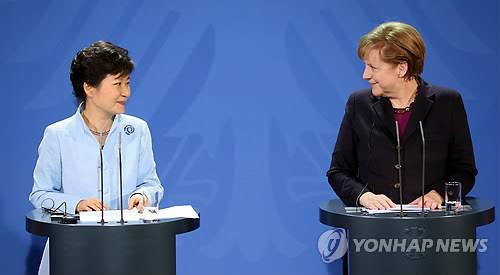
South Korean president Park Geun-hye meets with chancellor Merkel, to learn from the German experience with reunification.

                The idea of broadening one’s perspective and “looking outside the walls of a well” (hence the title of this column), also comes from Chinese and Korea folklore, a tribute to the oft overlooked influence that East Asia has had in the American culture. 

Sunday, February 22, 2015

Frogs in a Well: Castro's Desk

The year Fidel Castro came to power, there may have been three objects sitting on the desk of the Cuban prime minister: a small model of the Lincoln Memorial, a mini desk calendar turned to July 26th, and a rustic quill. Castro’s changing foreign interests have mystified many throughout his reign, and the evolution of these symbols may provide a window into the mindset of his 56-year dynasty.
1959-  When Castro seized control of the Cuban government on the first of the year, it was still heavily dependent on US corporations and investments, which had replaced the weight of the Spanish crown through the Treaty of Paris (1894). However, after the success of Castro’s 26th of July political movement, the new prime minister began dramatically re-working the entire economy. US-Cuba trade evaporated quickly following extreme taxes on American exports. Though the US government was already privy to Castro’s “anti-Yankee imperialism,” vice-president Nixon agreed to meet with Castro in Washington DC, the last such visit for the next half century.
1962- The objects on Castro’s desk have sustained a dramatic change. As the Cold War swept across the world, the quill that had reminded Cubans of America’s economic and political power snapped into two pieces when President Kennedy, pressured by American corporations, approved a stringent trade embargo with Cuba. In the same year, a model of a bobble-head pig armed with a missile found its way into the space on Castro’s desk, replacing the Lincoln memorial. In the midst of the Cold War, the CIA led over fifty attempts on Fidel Castro’s life, starting with the botched Bay of Pigs invasion, to prevent Cuba from joining the Soviets. Though the organization operated secretly through former Cuban exiles, Castro was not deceived. He quickly armed his country with missiles from the USSR, and the US just barely escaped armed confrontation with Communist forces. Just as the bobble-head figurine bounced its head comically from side-to-side, Castro’s erratic ambitions darkened his relations with the US.
1996- Amidst the exodus of dissatisfied Cubans to the US, 2 model fighter planes appeared on Castro’s desk. This year, the Cuban government shot down two such American planes flying over Cuban airspace. When the US Congress furiously extended the trade embargo to all of Cuba’s trade partners (Helms-Burton Act), deep-seated anger on both sides brought relations to their most volatile point.
2013- Seven years have passed since the first Castro bequeathed control of Cuba to his younger brother, Raul Castro. This year, the leather gloves that the second Castro wore to Mandela’s funeral appeared casually on the table – this was the same pair that he had worn while shaking hands with President Obama, the first such handshake to take place in 54 years.
2015- The seeds of revolution have sprouted out of the deep-rooted trade embargo. The armed pig on Castro’s desk has evolved into a small model of a wrapped and packaged American pork chop, mirroring the vast amount of US food aid that entered Cuba following Hurricane Michelle. Despite the sharp hostility of President Bush’s administration, the non-existent trade relations between the two nations have given way to cautious negotiations between the two countries. Though there is much uncertainty as to how these talks will affect Cuba’s anti-American stance, President Obama recently suggested a small addition to Castro’s desk- a small black desk phone, connecting directly to an identical one on his own desk. With these, there may come a time when the fierce rivals reach a point of understanding and democracy. Until then, I believe we must keep an eye on the Cuban leader’s desk.

Tuesday, November 18, 2014

Frogs in a Well: At the apex of the Women's Rights Campaign

                In 2012, a “mockingjay” entered the international stage. When the Taliban shot and critically injured this 15-year old girl, her voice was immediately amplified across the world as a powerful call for youth education. Her name is Malala Yousafzai. One afternoon, I was sitting in my room, surrounded by recent magazine clippings of Malala, when she paid me a visit. As if her passion and strong will had risen out of all of the articles, I envisioned her spirit standing in front of me, determinedly sharing her life’s message. Here is our interview.

Me: Malala, you’ve received the Noble Peace Prize, met with Obama, the Queen of England, and are talked about throughout the world. How does it feel to be looked up to by so many girls & children around the world?
Malala: It’s a real honor, but a strange feeling for me, because I’m really just like all of you. Even after being shot by the Taliban, I am still the same girl I was before; a teenager from Pakistan that wanted to go to school to be with her friends and receive an education.

Me: Are you scared of being targeted by the Taliban again?
Malala: Now, I only desire for all youth, even the children of the Taliban to have equal opportunities & the right to education. So you can say that, even though my view has not changed, I am thankful as the Taliban boy that shot me raised my voice, which is only one of the many for unprejudiced education, to the international community.

Me: What motivates you to continually speak out on human rights?
Malala: Ever since I was young, my dad has always encouraged me to speak out about my rights. I’m sure all of you, even as Americans, learn one key thing from our parents. Mine was that I had the right to be educated, and to have as many opportunities as my two younger brothers did. When I began blogging for the BBC Urdu, I was determined to receive an education despite all of the violence that surrounded me, and that desire has been with me even after I was shot. Now, I am receiving an excellent education in the United Kingdom, but whenever I think that another girl or another boy may be suffering from the same unequal opportunities I faced, I am filled with a burning desire to help them, and to make their voice heard to the international community.

Me: Do you have any advice for how members of the Saint Francis High school community can work to make a change for girls’ and boys’ education?
Malala: I greatly admire the environment in which many of you have grown and received an education. But let me ask you this: what are your plans for the future? My dream is for all children to be able to ask themselves that question without criticism or attack. If you have school clubs that allow you to stand up & speak out on the fight for children’s rights, join them to strengthen the campaign for equal education of all children. One child, one teacher, one pen, one paper can change the world. If we really want world peace, education will spark the revolution.

                With her last words ringing in the air, Malala’s spirit faded away from my room. But where she had just been standing, I could still sense a beacon of life, and I felt the intensity of her life’s dream welling up inside of me. Seeing in person a teenager, just like us, that had changed the world, I thought she had the power to make anyone see beyond the well.

Thursday, October 2, 2014

Frogs in a Well: the Ebola Virus Strikes Back!

The latest villain of news media has begun to penetrate the deepest fears of Americans. Is it Ronan? Kim Jong-un? No, it’s the ebola virus. The highly contagious disease that infected almost 6,000 and killed over 2,000 in Western Africa has left America terrified for its health. But perhaps these fears are not justified; could it be that our tendency to misread international events has made us into parochial frogs in a well?
According to statisticians, the answer, surprisingly, is “no.” The outbreak that first struck Guinea in December of last year has exploded into the most serious case of the disease to date; the current number of cases triples that of the first outbreak in the Democratic Republic of Congo in 1976, or the brief scare in Uganda at the turn of the century. The Centers for Disease Control and Prevention reported two weeks ago that the total civilian death rate by January 2015 will reach 11,000 at the very least, and 1.4 million in the worst case scenario.

However, as researchers are not the ones directly exposed to the virus, it is critical to consider the perspective of Africans. For those living in the disease-ravaged African coast, ebola has disrupted every aspect of daily life. Not only has the under-staffed and under-funded health care system refused to treat all but ebola cases, but public services, including schools in Guinea, Liberia, Sierra Leone, and Senegal have closed out of fear of spreading the contagion. Local residents commented to BBC on their frustration at the situation: “I’m against the government decision to [close all schools]… would you ask students to stop going to churches and mosques as well?” Though the government cannot prevent locals from gathering, it has every power to deny them access to basic medical aid. Stories of first-time mothers dying from pregnancy complications, or seniors battling desperately with the common flu have horrified Americans. In each of these situations, the victim died alone, as their suffering was deemed “not as important” as that from the ebola virus.
Even from the view of the medics themselves, the epidemic is a worst nightmare come true. Many of the workers are volunteers who raced to answer the world-wide plea for medical personnel. What the job description did not address though, was the fact that there is no cure or vaccine, or that most hospitals are ill-equipped to treat ebola. Volunteers are in contact with victims for far more than the recommended number of hours, and easily contract this fluid-borne illness. However, most infected volunteers do not have to worry about being refused medical aid. Dr. Rick Sacra contracted the disease in Liberia last month, but six days later, he was receiving expert care in the United States. For Americans at least, “the care [is] so excellent, so speedy,” and a world apart from the situation that faces African victims.

Then do we have any reason to fear an ebola outbreak in the US? Unless otherwise noted, our insurance money can more than easily contain any outbreak, in the case that one does occur in the United States. The real concern, though, is our blatant ignorance of the African health care. Why did it take a reoccurrence of the ebola epidemic for us to take our eyes off our own health care system? Before more deaths can take place, it is high time that we paid more attention to lacking medical facilities around the world, and fulfilled our obligation to improve international health. Perhaps then we will be less inclined to believe exaggerated news reports, and disperse the self-absorbed mist that clouds our perception of the world. Until then, Americans can be said only to be frogs in a well, unaware of the reality of the ebola virus in Africa, or most any other conflict beyond our country borders.

Sunday, August 24, 2014

Frogs in a Well: Why Migrate into the "Melting Pot"?

In the North American continent, two wars have taken countries by a storm. One, involving the massive influx of immigrants (many of them unaccompanied minors) from Latin American countries (especially Honduras and Guatemala); two, encompassing Congress, and its failure to surpass political interests in order to pass effective legislation. Though the two issues may at first seem distinct, polemics in both conflicts are involved in a game of "chicken and egg," with both sides implying that the present-day errs and complications are a result of the opposite dispute.

Most of the immigrants come from Spanish-speaking countries in the Northern Triangle. Mexico is excluded, as current immigration laws allow for the immediate deportation of Mexicans across the border without trial.

Since civil war first entered the scene in Latin America, the number of immigrants looking to the US as a haven from violence has been steadily increasing. Mainly, the number of unaccompanied minors that are crossing the border has grown by more than 117%. (51,729 youth migrants were counted entering the country in this fiscal year, beginning October 2013. Hispanics and Asian-Americans make up 2/3 of the immigrant population in the US, while Hispanics comprise 3/4 of the illegal population.) Youth often flee pressure to join one of the local gangs; if they succumb, their family may come under fire from enemy gangs while if they refuse, the offer is likely to turn lethal.

The route of drug trafficking and involved gangs through Central America via the main source countries of many refugees in the US.
Residents of Latin America have reason to fear for their lives. Honduras, Guatemala, and El Salvador, the three major source countries of refugees and migrants, comprise the Northern Triangle, dubbed the "most violent region not involved in war." Homicide rates in these countries are at a record high, though the UNODC (United Nations Office on Drugs and Trafficking) reports that these rates may not reveal the full extent of violence, as many citizens do not trust the responsiveness of police enough to report crimes. Growing up in such circumstances, many youth are unable to receive education or a stable job, forming the Ni/ni generation, a group of over 20 million Latin American young adults (ages 15-24) that "neither work, nor study." Many such youth join the gang culture for a sense of purpose and protection, but end up heightening the intensity of violence, and force other youth to flee the country.

Members of the "Ni-ni generation," standing in an endless queue for the employment office.
If so many juveniles are bringing unrest to the country by joining gangs, why not abolish the gang culture? Unfortunately, the gang rivalry in Central America causing the loss of so many lives, finds its root in Congress's inability to handle the broadening crisis. The first generation of Hispanics that fled the civil war in their hometowns in the 1980s found itself without financial support, a stable job, nor the acceptance of mainstream Americans. (The lack of institutions to aid assimilation is often blamed on the government's inability to realize the potent impacts of immigration.) The children of these immigrants found solace in forming gangs with others like themselves, a phenomenon for which LA has received the nickname of "gang capital of America." According to early immigration laws, these youth were deported to countries such as Guatemala or Honduras; for many of the gangs, this was the first time its US-born members had ever set foot in the region. Today, these troubled juveniles have created one of the most dangerous territories in the world, an unrestrained gang war zone that makes the violence in the southern US seem like child's play. Gangs such as the Mara or 204th street gangs (named after the LA streets in which they were first established) have gained over 70,000 members each, and continue to resorted to drug trafficking and terror, unchecked by Latin American police forces or law enforcement officials.
If Congress were to pass a 'comprehensive immigration reform' bill, it could take the first steps in reorganizing the current system of handling immigrants, before tackling the unrelenting stream of new refugees.

So which came first? The chicken or the egg; the deficient immigration laws or the influx of Hispanic immigrants? Currently, the White House position states that extreme poverty and the endemic of gang violence paired with the lacking rule of law brought on the current calamity. What better country to seek economic incentives and refuge than the "country of immigrants"? However, according to House Republican (Judiciary Committee Chairman) Robert Goodlatte, "Word has gotten out around the world about President Obama's lax immigration enforcement policies, and it has encouraged more individuals to come to the United States illegally, many of whom are children from Central America." (What's Causing the Latest Immigration Crisis?) There may be a grain of truth in this statement as well. Besides the economic or refuge-motivated incentives, immigrants that cross the border today are discharged to the care of relatives with only an assigned date to appear in court. (Only Mexican immigrants can be immediately deported due to child trafficking laws.) With court appearance dates backlogged 587 days on average due to the lack of immigration court lawyers and judges, many immigrants think of their court appearance notices as proof of their legal status in the US, and contact family members with the false news. Ultimately, it remains to be seen whether Congress and the White House will be able to reach an affirmative decision to stem the flow of immigrants by addressing the cause for their exodus (release of false news or gang crisis), or effectively integrate them into American society.

Tuesday, August 12, 2014

Flashback: the Gabo Reform (Joseon Dynasty)

Before becoming the Korean empire, the Korean peninsula was under the rule of the feudal system in the Joseon Dynasty. In an uprising called the "Gabo Reform" (named for the year in which it occurred, 1984, according to the Chinese Stems-and-branches calendar), a people's rebellion similar to those that occurred in Western Europe, the commoners and peasants successfully overthrew the traditional hierarchy, abolished slavery, and established several institutions that would contribute to a more democratic society. Similar reforms continued through the start of the 20th century, until Korea was forcefully annexed by the Japanese Empire. Some historians believe that the reforms taking place during this period were influenced by the Meiji Reform that had taken place in Japan. Regardless of the presence of Japanese ideology, the movements comprising the Gabo Reform moved the country greatly in the path toward modernization, a process that was furthered, albeit forcefully, during the Japanese Occupation period.

https://drive.google.com/file/d/0BzTDmkWTzr6PYU1RTk0xcHBUN00/edit?usp=sharing

Saturday, August 2, 2014

The Visible & Muffled Minority

Koreans, historically, are unwelcoming to foreigners. Before the country was forced open to Western influences under Japan's dominion, it had maintained a strict closed-door policy to all contact but trade and cultural exchange with neighboring China and Japan. This policy was gradually cemented into the Korean mindset following French and American campaigns against Korea in the mid-19th century. In retaliation for the execution of its first missionaries sent to Korea (an act motivated mostly by the humiliation brought on by foreign powers in the Opium Wars), the French deployed a naval mission to the hermit kingdom. Though the French forces were forced to retreat, Korea lost many valuable books and national treasures to plundering, and it remained sore from this encounter throughout its first interactions with the US and other Western powers.
The Paris Foreign Missions Society in the 19th century. The four missionaries on the left were later martyred in Korea.
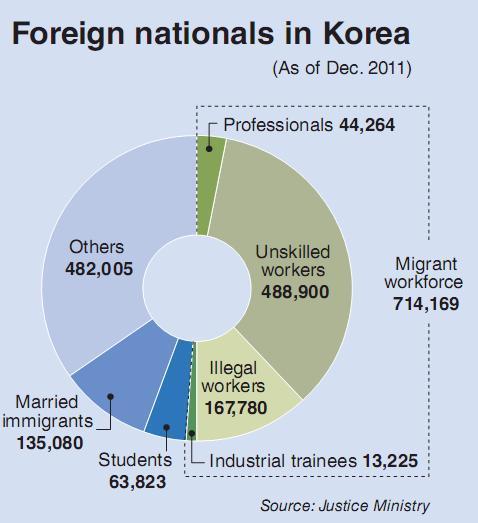
Today, almost no trace of such hostility remains in the Korean economy, which in 2011 was ranked 7th and 9th in total international exports and imports, respectively. However, Korea is still characterized by a populational homogeneity that has only now begun to diversify with the influx of foreign migrants. As a member state of the prestigious 20-50 club, an exclusive group of countries (7 total) with a per capita income exceeding 20,000 USD, and a population of over 50 million, Korea provides an ideal environment for many investors, foreign workers, and exchange students. While Western travelers described local hospitality as "their most distinctive impression of Korea," Koreans have been known to discriminate and treat poorly visitors from other Asian countries, especially those that come to the country with purposes beyond tourism or temporary study. At the crux of this conflict is the rising presence of foreign marriage migrants and long-term laborers.Laborers, especially those from South Asia, are leased to enter the country under the competitive "Employment Permit System Recruitment," a system that delegates immigrants jobs in manufacturing, construction, agriculture, and fishery that have often been classified as "DDD" (dirty, dangerous, demeaning). Even after entering Korea, such laborers are only guaranteed two 4.5-year residencies, just short of the 5 year requirement for permanent residency. Unfortunately, such unfair policy is merely a reflection of Korean sentiment, which is piled high against immigrants.
One of many Korean visas issued to foreigners entering Korea for work. Continual restrictions on the issuance of visas has not discouraged foreigners who compete fiercely for the coveted legal acknowledgement.

Another group facing strong persecution in Korea is migrant spouses. While 86% of laborers are male, nearly all entering spouses are Asian women, following their husbands to a foreign land, where they are often shunned for their distinct appearance and inability to speak Korean. Many of these women follow their husbands for the rich economic opportunities in Korea, which can translate to remittances for struggling family members back home. Unfortunately, children of these "multicultural families" often face the brunt of prejudice. Despite identifying as Korean, many are shunned by their peers and teachers due to their mixed bloodline; those unable to afford school are often under-educated and unable to speak proper Korean or gain a high paying job. Unlike in other destination countries, migrants in the Korean Peninsula are isolated from mainstream Korean society for life, and the government is only now beginning to enact infrastructure protecting foreigners' rights.
Foreign wives assimilate to a new life in Korea through cultural immersion activities such as making the side dish kimchi.

In 2008, the Korean government released an "Act on Support for Multicultural Families." Recognizing the increasing percentage of "multicultural families," the legislature sought to organize efforts at integrating foreign mothers and their half-Korean children into regular society, while also defending migrant laborers' rights against work-related prejudice. Recently, several NGOs in the country have released a myriad of suggestions specifically targeting youth integration into the economy/society. The proposed solutions include, but are not limited to translating official documents and educational guidebooks into common minority languages(also provides jobs for immigrants), creating a government-funded network of multicultural families to allow greater communication and representation, providing extra Korean language classes especially for resident aliens (can be founded in partnership of the Office of Education and local community colleges). However, none of these solutions have yet been  implemented, and current infrastructure reveal a disinclination for the maintenance and funding of integration programs. So why do foreigners continue to flock to the Korean Peninsula? Beyond the obvious economic reasons, immigrants to Korea gain access to a much broader job market, and comparatively equal opportunities regardless of gender. Koreans are grudgingly tolerant of foreign laborers, for not only do they fill the undesirable "manual labor" roles, but the current system encourages temporary stay, which provides migrant labor on a temporary basis, meeting the seasonal demands of industries such as agriculture or fishing, without the obligation to provide for their welfare. Additionally, Korea has one of the world's lowest birth rates, at a meager 1.3 children per woman (Ministry of Health and Welfare). Korea's population is estimated to continue decreasing over the next few decades, due to a social environment in which women are more often choosing to work, instead of getting married and rearing the next generation. In this manner, migrant wives have been instrumental in providing children for many young Korean males who find themselves without a partner.
Korea's quickly rising foreign population. Statistics have risen significantly since this study was conducted in Dec. 2011.

Korea, previously a country unmentioned on world maps, is now one of the most appealing destination nations for international migrants. Where the US was once the paragon for economic opportunity, the Korean Dream is now fueling the paths of many migrants, especially in Southern Asia. Though the government and people are encountering many obstacles in accommodating the new residents, Korea must recall the policy decisions of other destination countries, including the US and Canada, and gradually build an environment of not only tolerance, but respect.

Sunday, June 29, 2014

Frogs in a Well: Resolving the crisis of Small Arms Proliferation

In the United Nations, the main goal of the General Assembly and other collective bodies of nations is to pass resolutions that offer policy recommendations to state governments and the action-charged Security Council. While normally unable to directly cause actions to happen, these resolutions are the result of great negotiation between nations, and can inspire very specific change in the international community. Model United Nations attempts to model this collaboration and develop policy ideas by pitting student delegates (each representing a different country) against one another on the United Nations floor. Take a look at the below resolution, passed in the Disarmament and International Security at the 2014 UCLA MUN Summer Institute. The different nations' policies that went into the development of the resolution is a true widening of perspective, opening up the mouth of our "world view well."

 United Nations
General Assembly

Committee: Disarmament Commission
Topic: Regulating the Illicit Proliferation in Small Arms
Sponsors: Italy, Poland, Spain, Costa Rica, Japan
Signatories: Sweden, Mexico, South Korea, Belgium, Lithuania, Greece, United Kingdom, Brazil, Argentina, Australia

Keeping in mind the Arms Trade Treaty as originally signed, especially articles 7 & 8 in regards to the import and export of small arms,

Recognizing the individuality of countries and the need for a resolution that properly addresses the subtle variances in nations’ policies,

Recalling the Charter of the United Nations article 26, which established the need for an arms regulation system, and article 51, highlighting the inherent right of individual self-defense for international peace and security,

Affirming the sovereignty of individual states in the right to bear arms,

Considering the role of small arms export in arms-producing countries as a valuable industry

Highlighting the impact of the UN Firearms Protocol in declaring the illegal manufacture of small arms a criminal offense,

1. Urges the establishment of realistic goals in working toward small arms disarmament by:
  1. reducing small arms production by 10% every 5 years for the next 25 years to work for gradual complete disarmament,
  2. creating an international body tasked with overseeing stockpile reduction,
  3. mandating that all member states of the international body report back to the committee annually on disarmament progress;

2. Recognizes the inability of countries to impose anti-proliferation measures and provides     financial support to countries that need it by:
a. Reasserting the points previously stated by the Arms Trade Treaty (ATT),
b. Further proposing the implementation of an international tracing system:
i. amends the jurisdiction of the UN International Tracing Instrument by increasing     the consequences to states for refusal to cooperate with the terms of the treaty,
ii. promotes transparency and communication between states to facilitate an international movement toward combating the illegal trade;

3. Implements the Arms Recycle Program:
a. In which individuals turn-in guns to their respective governments which then melts and recycles them into useful products:
i. fulfills the demand for jobs in the industry,
ii. increases economic development and independence as recycling plants will be constructed directly in the affected countries;
b. In which governments will incentivise individuals with monetary compensation,
i. requests funds from NATO, the European Union, and the United Nations General Assembly to implement this program,
c. In turn, the UN will build infrastructure to governments in exchange for reaching a target number of arms;

4. Proposes the development of a guns registration system in all arms-producing countries
a. Functioning at the site of arms producing factories in order to prevent the transfer of guns outside of the country before registration,
b. Designates a serial number for every small arm in production in order to track the distribution of individual small arms.

5. Recommends the implementation of legislation which would increase the punishment for owning or possessing any illegal small arm